
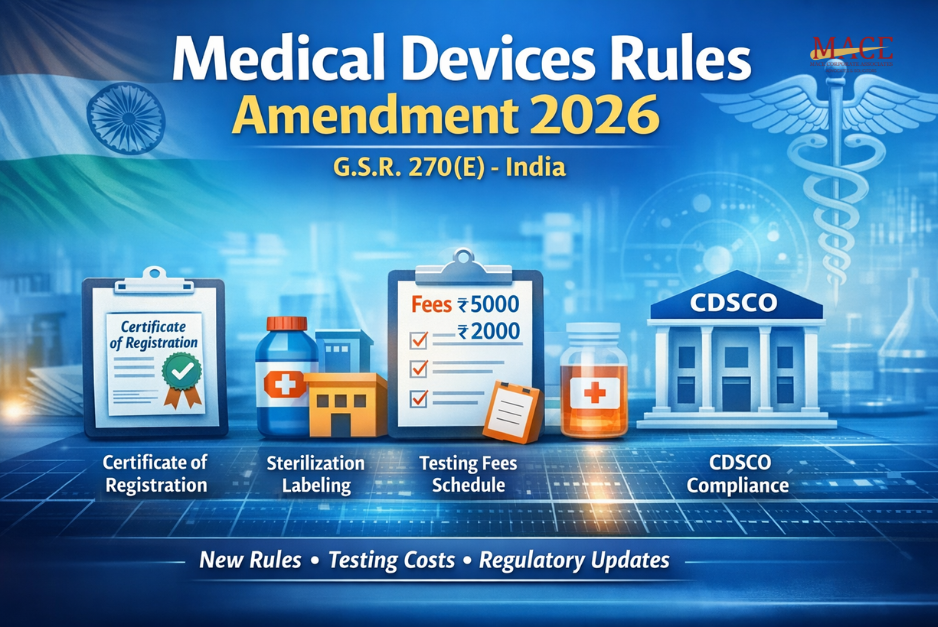
In Medical Devices Rules Amendment 2026: Draft Changes Under G.S.R. 270(E) in India
In Medical Devices Rules Amendment 2026: Draft Changes Under G.S.R. 270(E) in India
What is the Medical Devices Rules Amendment 2026?
The Medical Devices Rules Amendment 2026 is a draft notification issued under G.S.R. 270(E) dated 10th April, 2026 to amend the Medical Devices Rules 2017.
These updates are part of evolving medical device regulations in India, aimed at improving compliance, clarity, and transparency within the CDSCO medical device rules framework under the Central Drugs Standard Control Organization.
The draft is open for public consultation, and stakeholders across India’s medical device industry can submit objections or suggestions within 30 days from the date of publication.
What are the key changes in the Medical Devices Rules Amendment 2026 in India?
1. Short Title and Commencement
The draft rules will be called the Medical Devices (Amendment) Rules, 2026 and will come into force from the date of final publication in the Official Gazette, unless specified otherwise.
This follows standard practices under medical device compliance in India.
2. What changes are made in Rule 3 (Definitions)?
- The words “of a licencee” in clause (j) are proposed to be omitted.
- A new clause (ya) introduces the definition of Certificate of Registration under the CDSCO medical device registration framework in India.
Definition:
A Certificate of Registration is issued by:
- State Licensing Authority (India)
- Central Licensing Authority (India)
in Form MD-2, MD-40, or MD-42.
This brings greater clarity to the medical device registration process in India.
3. What is the new labeling requirement under Rule 44 in India?
A new clause (p) strengthens medical device labeling requirements in India.
Key Requirement:
If a manufacturer outsources sterilization:
- The sterilization site license number must be mentioned on the label
- It should be written as:
- “Sterilization sites Manufacturing License Number”
- “Ster. Mfg. Lic. No.”
- “S.M. L”
This improves traceability and enhances medical device compliance in India.
4. What is the structural change in Rule 44?
The clause reference is updated:
- “and (m)” → replaced with “(m) and (p)”
This ensures proper integration into the medical device regulations in India framework.
5. What is the Ninth Schedule in MDR Amendment 2026 India?
The Ninth Schedule introduces a structured system for medical device testing fees in India.
Examples of Testing Fees in India:
- Implantation test – ₹5000
- Sterility test – ₹2000
- Surgical dressings – ₹1000
- Syringes & needles – ₹1000
- Physical / physiochemical tests – ₹2000
- Surgical sutures – ₹3000
- Optical / chemical tests – ₹250 each
- Absorbency & related tests – ₹150 each
- Condoms – ₹2500
- Intrauterine devices – ₹2500
- Bacterial endotoxin test – ₹3000–₹4500
Important Points:
- Fees for unspecified tests will be decided by the authority in India
- Testing costs will increase by 5% annually
This improves transparency in the medical device approval process in India.
6. What is the amendment in Rule 19?
A new sub-rule (3) states that:
- Testing and evaluation fees will be as per the Ninth Schedule
This ensures consistency across CDSCO medical device rules in India.
7. What is the amendment in Rule 69?
- Applications in Form MD-33 must be submitted with fees as per the Ninth Schedule
This aligns application procedures with updated medical device regulations in India.
What is the impact of MDR Amendment 2026 in India?
The Medical Devices Rules Amendment 2026 (India) strengthens the regulatory framework by:
- Improving clarity in the medical device registration process in India
- Enhancing medical device labeling requirements in India
- Standardizing medical device testing fees in India
- Strengthening overall medical device compliance in India
These updates create a more transparent, structured, and globally aligned medical device regulatory system in India.
Conclusion
The Medical Devices Rules Amendment 2026 under G.S.R. 270(E) is a significant step toward strengthening medical device regulations in India.
By introducing structured testing fees, refining labeling requirements, and clarifying registration provisions, the amendment enhances the CDSCO medical device approval process in India.
Stakeholders across the Indian medical device industry are encouraged to review the draft carefully and submit feedback within the prescribed timeline.
FAQs: Medical Devices Rules Amendment 2026 (India)
1. What is the Medical Devices Rules Amendment 2026 in India?
The Medical Devices Rules Amendment 2026 is a draft notification issued under G.S.R. 270(E) to amend the Medical Devices Rules 2017. It aims to improve medical device regulations in India by enhancing compliance, clarity, and transparency under the CDSCO medical device rules framework.
2. Who regulates medical devices in India?
Medical devices in India are regulated by the Central Drugs Standard Control Organization (CDSCO), which oversees medical device registration, approval, and compliance in India.
3. What are the key changes in the Medical Devices Rules Amendment 2026?
Key changes include:
-
Introduction of Certificate of Registration definition
-
New labeling requirements for sterilization outsourcing
-
Addition of the Ninth Schedule for medical device testing fees in India
-
Updates in Rule 19 and Rule 69 for fee structure alignment
4. What is the Ninth Schedule in the amendment?
The Ninth Schedule defines medical device testing fees in India, including charges for sterility tests, implantation tests, and other evaluations. It also introduces a 5% annual increase in testing costs.
5. How does the amendment impact medical device compliance in India?
The amendment improves medical device compliance in India by strengthening labeling rules, standardizing testing fees, and clarifying registration procedures. This leads to a more transparent and efficient medical device regulatory system in India.
Access the official draft notification on Medical Devices Rules Amendment 2026 (G.S.R. 270(E)) to stay updated on CDSCO medical device regulations in India.
Note:
Cases related to Pharmaceuticals are highly technical and knowledge-driven. If you're searching for a drugs and cosmetics lawyer in India, a pharmaceutical lawyer, Mace Corporate Associates is the perfect place. If you are searching for a DPCO Lawyer for overcharging cases or DPCO Compliance, Mace can assist you well.
May it be a clinical trial Lawyer or a Medical device lawyer, Mace can be of great and perfect match for Pharmaceutical litigation. Mace has an accomplished track record for Not of Standard Quality Cases, Licensing Cases etc.

Want to know more?
Our team will answer all your questions. we ensure a quick response.
 (011)-46113619